
What science suggests, what’s still emerging, and how to use it thoughtfully
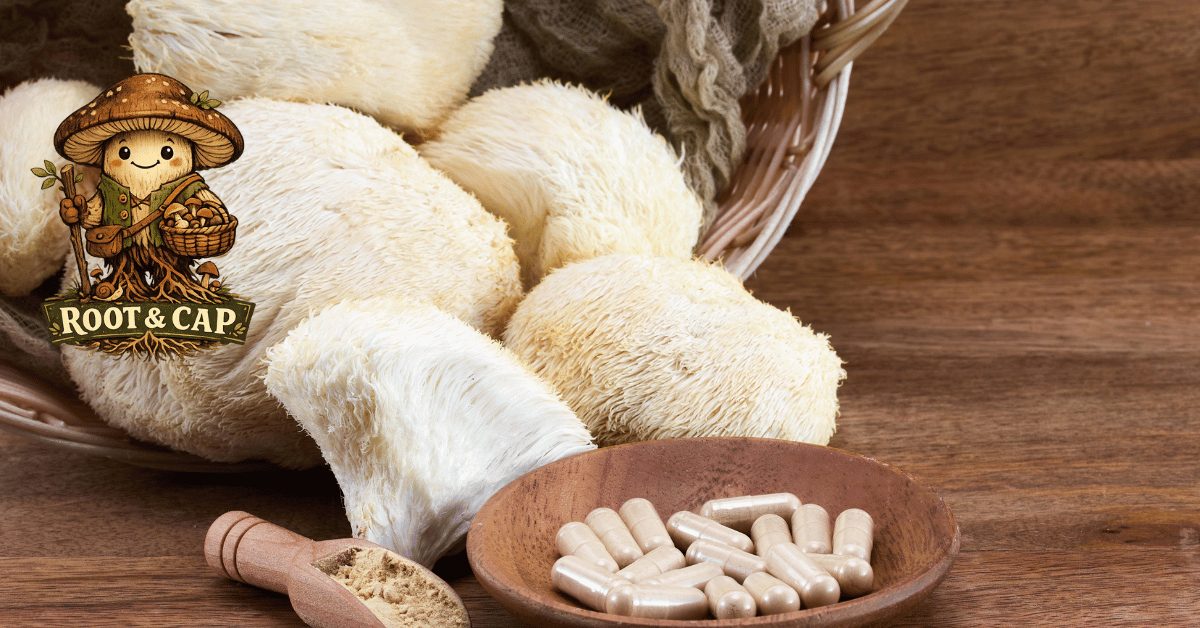
Lion’s mane mushroom (Hericium erinaceus) is one of the most talked-about functional mushrooms today. Known for its shaggy, white appearance and subtle seafood-like flavor, it has a long history of culinary and traditional use—particularly in East Asia—and a growing body of modern research exploring its potential benefits.
This article breaks down what lion’s mane is, what the research actually shows, and how to approach it responsibly—without hype or unsupported health claims.
What Is Lion’s Mane Mushroom?
Lion’s mane is an edible and medicinal mushroom traditionally used in Chinese and Japanese food cultures. In the kitchen, it’s valued for its tender, fibrous texture. In research settings, it’s studied for unique bioactive compounds, particularly hericenones and erinacines, which are not commonly found in other mushrooms.
These compounds are the primary reason lion’s mane is often discussed in relation to brain and nervous system research.
Potential Benefits of Lion’s Mane Mushroom
1. Cognitive & Brain Health Support (Emerging Evidence)

Lion’s mane has been studied for its interaction with nerve growth factor (NGF), a protein involved in the growth and maintenance of neurons.
- What studies suggest:
Laboratory and animal studies indicate that compounds in lion’s mane may stimulate NGF activity. Small human trials have explored its potential role in supporting mild cognitive function in older adults. - Important context:
Human research is still limited in size and duration. Lion’s mane should not be positioned as a treatment or preventative therapy for neurological disease.
Takeaway: Promising area of research, but still developing.
2. Nervous System & Nerve Health (Preclinical Research)
Animal and cell-based studies have examined lion’s mane for its potential role in nerve regeneration and repair.
- These effects are largely observed in preclinical models, not large-scale human trials.
- Results help explain why lion’s mane is traditionally associated with nerve and brain health, but they do not yet translate to medical recommendations.
Takeaway: Scientifically interesting, not clinically conclusive.
3. Mood & Stress Support (Early Human Studies)
Some small human studies have explored lion’s mane in relation to mood, stress, and subjective well-being.
- Participants in limited trials reported improvements in mood-related measures over short periods.
- Mechanisms are not fully understood and may relate indirectly to inflammation or nervous system signaling.
Takeaway: Early findings are encouraging but far from definitive.
4. Digestive & Gut Health (Traditional Use + Early Research)

As an edible mushroom, lion’s mane contains:
- Dietary fiber
- Beta-glucans, compounds associated with immune and gut health in many mushrooms
Some studies suggest lion’s mane may support the integrity of the gut lining in animal models.
Takeaway: Likely supportive as part of a fiber-rich, whole-food diet.
5. Antioxidant & Anti-Inflammatory Properties
Like many mushrooms, lion’s mane contains antioxidant compounds.
- Research indicates potential anti-inflammatory activity in laboratory studies.
- These properties are common across many culinary mushrooms and should be viewed as part of an overall dietary pattern, not a standalone solution.
Lion’s Mane as Food vs. Supplements
Culinary Use
- Fresh lion’s mane is low-calorie, high in fiber, and versatile.
- Often sautéed, roasted, or shredded as a seafood alternative.
- Culinary use is generally considered safe for most people when properly cooked.
Supplements
- Available as powders, capsules, and extracts.
- Potency varies widely depending on growing method, part used (fruiting body vs. mycelium), and extraction process.
- Quality and transparency matter greatly.
At Root & Cap, we emphasize education and sourcing transparency so consumers can make informed choices.
Safety & Considerations
- Lion’s mane is generally well-tolerated as a food.
- Some individuals may experience digestive upset or allergic reactions.
- Anyone pregnant, nursing, or managing a medical condition should consult a qualified healthcare professional before using concentrated supplements.
The Bottom Line
Lion’s mane mushroom is nutritious, culinary-friendly, and scientifically intriguing. Research suggests potential benefits related to brain health, nerve support, mood, and gut health—but much of the evidence is still emerging.
Rather than a miracle ingredient, lion’s mane is best understood as:
- A valuable edible mushroom
- A subject of ongoing scientific study
- A supportive component of a balanced diet and lifestyle
Leave a Reply