
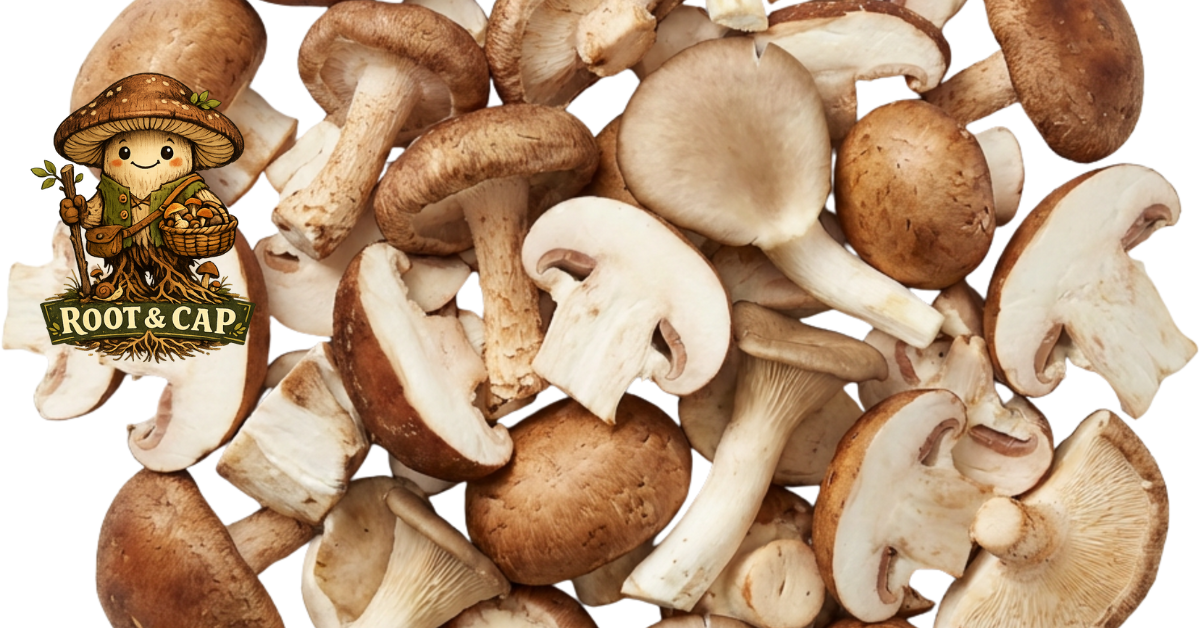
Cremini mushrooms and button mushrooms are often treated as interchangeable. They sit side by side at the grocery store, look similar once sliced, and frequently appear in the same recipes. But while they’re closely related, they are not identical—and those differences matter when it comes to flavor, texture, cooking behavior, and even how long they last.
In this guide, we’ll take a deep look at cremini mushrooms vs. button mushrooms: what they are, how they differ, how they behave in the kitchen, and when one may be a better choice than the other. Think of this as a practical, field-guide-style comparison meant to help you cook with more confidence and intention.
Are Cremini and Button Mushrooms the Same Thing?
Yes—and no.
Cremini mushrooms and button mushrooms come from the same species. The difference between them is maturity, not variety.
- Button mushrooms are harvested early, while the caps are still tightly closed and pale in color.
- Cremini mushrooms are harvested later, after the mushroom has matured slightly. Their caps are brown, the structure is denser, and the flavor is more developed.
If allowed to grow even longer, cremini mushrooms eventually become portobello mushrooms. In that sense, these three mushrooms represent different life stages of the same organism.
Understanding this shared origin helps explain both their similarities and their differences.
Visual Differences
At a glance, the most obvious distinction is color.
- Button mushrooms are white to off-white, with smooth caps and short stems.
- Cremini mushrooms range from light brown to deep chestnut, with slightly firmer caps and a more robust appearance.
Once cooked, however, the visual differences become less pronounced—especially if the mushrooms are sliced or chopped.
Flavor Comparison
One of the most meaningful differences between cremini mushrooms vs. button mushrooms is flavor.
Button Mushrooms
- Mild and subtle
- Lightly earthy
- Neutral enough to blend into almost any dish
Their gentle flavor makes them approachable, but it also means they rely heavily on seasoning, fats, and aromatics for depth.
Cremini Mushrooms
- More pronounced earthiness
- Slightly nutty, savory notes
- Naturally richer taste
Cremini mushrooms bring more inherent flavor to a dish, even before seasoning. That difference becomes especially noticeable in simple preparations like sautéing or roasting.
Texture and Structure
Texture is another area where maturity makes a difference.
Button Mushrooms
- Softer flesh
- Higher perceived moisture
- Cook down quickly
Because they’re younger, their cell structure breaks down a bit faster during cooking.
Cremini Mushrooms
- Denser, firmer texture
- Hold their shape better
- Slightly “meatier” bite
This makes cremini mushrooms better suited for dishes where structure matters, such as grain bowls, stir-fries, or mushroom-forward sautés.
How They Behave When Cooking
Both mushrooms are high in water and follow the same general cooking pattern: they release moisture first, then brown once that moisture evaporates. The difference lies in how quickly and how intensely this happens.
Button Mushrooms in the Pan
- Release water quickly
- Shrink noticeably
- Brown more delicately
They’re forgiving, but they benefit from proper heat and space in the pan to avoid steaming.
Cremini Mushrooms in the Pan
- Release water more gradually
- Develop deeper browning
- Produce stronger savory aromas
Because of their density, cremini mushrooms tolerate longer cooking times and higher heat without becoming soft too quickly.
Best Uses for Each
Rather than asking which is “better,” it’s more useful to ask which is better for a specific purpose.
When Button Mushrooms Shine
- Soups and broths
- Sauces and gravies
- Omelets and egg dishes
- Casseroles and baked dishes
- Raw applications like salads (when very fresh)
Their mildness allows other ingredients to take the lead.
When Cremini Mushrooms Are the Better Choice
- Sautéed mushroom dishes
- Roasting and grilling
- Pasta and risotto
- Grain bowls and stir-fries
- Dishes where mushrooms are a main component
They bring more flavor and texture with less reliance on seasoning.
Nutritional Differences
Nutritionally, cremini mushrooms and button mushrooms are very similar, which makes sense given their shared species.
Both provide:
- B vitamins such as riboflavin and niacin
- Small amounts of potassium
- Fiber
- Naturally occurring compounds associated with umami flavor
Cremini mushrooms may contain slightly higher levels of some nutrients due to maturity, but the difference is modest. From a practical standpoint, nutrition should not be the deciding factor between the two.
Shelf Life and Storage
Maturity also affects how these mushrooms store.
Button Mushrooms
- Slightly shorter shelf life
- More sensitive to excess moisture
- Show bruising and slime sooner if stored improperly
Cremini Mushrooms
- Slightly longer-lasting
- Better resistance to minor handling
- Darker color hides small imperfections
Both should be stored unwashed, in breathable packaging, and refrigerated promptly. Proper storage matters more than variety when it comes to longevity.
Cost and Availability
Button mushrooms are usually:
- Less expensive
- Available year-round
- Stocked almost everywhere
Cremini mushrooms:
- Cost slightly more
- Still widely available
- Often perceived as a “step up” in quality
The price difference is typically small, but noticeable if mushrooms are a staple in your cooking.
Common Myths About Cremini vs. Button Mushrooms
Myth: Cremini mushrooms are a completely different type.
They’re the same species at a later stage of growth.
Myth: Button mushrooms are inferior.
They’re milder, not lower quality. When used correctly, they perform beautifully.
Myth: Cremini mushrooms are always better.
They’re better for some dishes, not all. Mildness is an asset in many recipes.
Which Should You Choose?
Choose button mushrooms if:
- You want a subtle flavor
- Mushrooms play a supporting role
- You’re cooking delicate or blended dishes
Choose cremini mushrooms if:
- You want a deeper, earthier flavor
- Mushrooms are a featured ingredient
- Texture and browning matter
Many cooks keep both on hand and use them interchangeably once they understand how each behaves.
The Root & Cap Perspective
At Root & Cap, we see this comparison not as a hierarchy, but as a continuum. These mushrooms represent different stages of the same organism, each with its own strengths.
Learning how maturity affects flavor, texture, and cooking behavior helps you make better choices—and get more value from every mushroom you bring into the kitchen.
Related Guides
- Button Mushrooms: What They Are & How They’re Used
- How to Store Fresh Mushrooms So They Actually Last
- How to Cook Fresh Mushrooms
Bottom Line
When it comes to cremini mushrooms vs. button mushrooms, neither is inherently better. They’re closely related, but maturity gives them different personalities in the kitchen.
Button mushrooms are mild, versatile, and forgiving. Cremini mushrooms are richer, firmer, and more expressive. Knowing when to use each turns a simple ingredient choice into a deliberate cooking decision—and that’s where better results begin.
Leave a Reply