
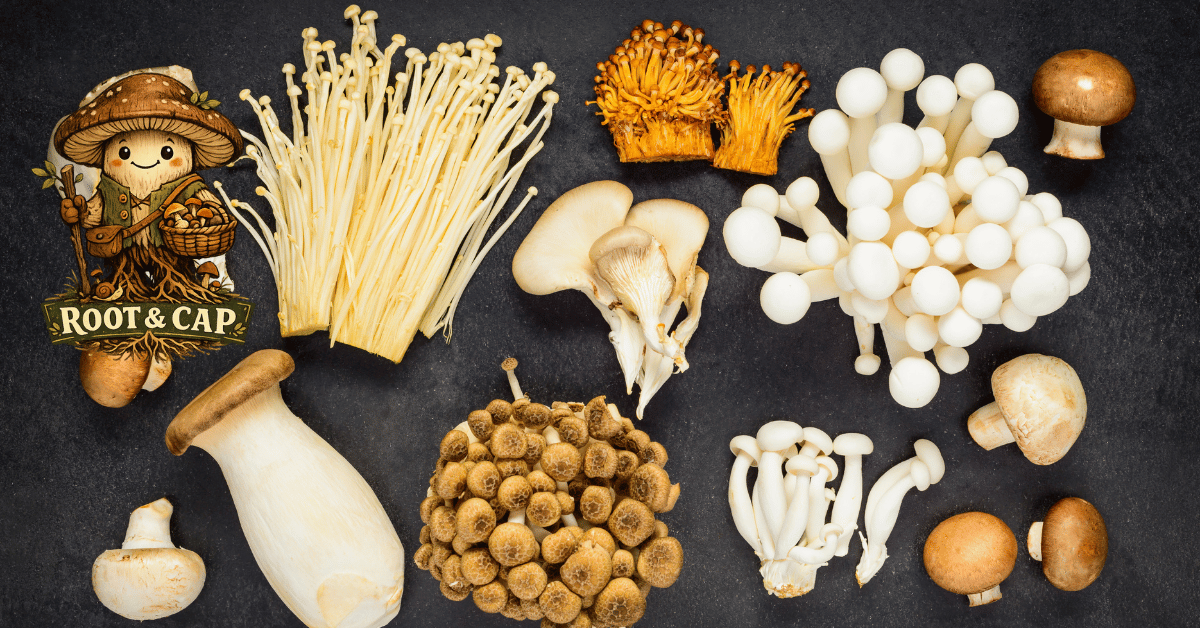
Mushrooms are far more than a single ingredient or garnish. They represent a vast and diverse kingdom of organisms that play essential roles in ecosystems, agriculture, cuisine, and scientific research. From familiar grocery-store staples to rare wild varieties, mushroom types differ dramatically in how they grow, taste, and interact with the world around them.
This guide explores the major categories of mushrooms, with a focus on edible and commonly cultivated types. It is designed as an educational foundation—helping readers understand what differentiates one mushroom from another, how they are used, and why they matter. Individual species such as oyster mushrooms, shiitake, or lion’s mane can then be explored more deeply in dedicated guides.
Understanding Mushroom Classification
Before diving into specific types, it helps to understand how mushrooms are categorized. Mushrooms are the fruiting bodies of fungi, which live most of their lives as underground (or internal) networks of mycelium. Scientists classify mushrooms based on genetics, structure, and reproductive features, but for culinary and agricultural purposes, they are usually grouped by:
- Edibility and use (culinary, medicinal, functional)
- Growth habit (wood-loving vs. soil-growing)
- Texture and flavor
- Cultivation method
This article focuses on mushrooms commonly encountered in food systems, whether cultivated or responsibly foraged.
Common Edible Mushroom Types

Button, Cremini, and Portobello
These three mushrooms all come from the same species and represent different stages of maturity.
- Button mushrooms are harvested young, with closed caps and a mild flavor.
- Cremini mushrooms are slightly more mature, darker in color, and earthier in taste.
- Portobello mushrooms are fully mature, with wide caps and a dense, meaty texture.
Because of their availability and versatility, these mushrooms form the backbone of many Western cuisines. They are commonly sautéed, roasted, grilled, or stuffed.
Oyster Mushrooms

4
This group includes several varieties known for their fan-shaped caps and tender texture. They grow naturally on hardwood and are widely cultivated on agricultural byproducts like straw or sawdust.
Oyster mushrooms are prized for:
- Fast growth
- Mild, savory flavor
- Excellent texture for plant-forward cooking
They are often used in stir-fries, roasts, and sautés and are a popular choice for both chefs and home cooks.
Shiitake Mushrooms

Native to East Asia, shiitake mushrooms grow on hardwood logs and have been cultivated for centuries. They are recognizable by their umbrella-shaped brown caps and firm texture.
Shiitake mushrooms are valued for:
- Deep umami flavor
- Chewy, satisfying bite
- Use in broths, stir-fries, and braised dishes
They are also widely studied in nutritional research, though they are best understood primarily as a flavorful whole food.
Lion’s Mane

This distinctive mushroom forms cascading white spines rather than a traditional cap and stem. Its texture is soft and fibrous, often compared to seafood when cooked.
Lion’s mane is commonly:
- Pan-seared
- Roasted
- Used as a meat alternative in plant-forward dishes
It is also a focus of growing scientific interest, though culinary use remains its most established role.
Wood-Loving vs. Soil-Growing Mushrooms
One of the most important distinctions among mushroom types is where and how they grow.
Wood-Loving Mushrooms
These species feed on dead or decaying wood. Common examples include:
- Oyster mushrooms
- Shiitake
- Lion’s mane
- Enoki
They are often cultivated on logs, sawdust blocks, or agricultural waste and play a key role in breaking down lignin and cellulose in forests.
Soil-Growing Mushrooms
These mushrooms grow from the ground, often in association with plant roots or organic matter in soil. Examples include:
- Button/cremini/portobello
- Morels
- Truffles
Their growth cycles are often more complex and, in some cases, difficult to replicate in cultivation.
Wild and Foraged Mushroom Types

Wild mushrooms occupy a special place in culinary culture, but they require caution and expertise.
Morels
Highly prized for their honeycomb appearance and rich flavor, morels appear seasonally and are difficult to cultivate commercially.
Chanterelles
Known for their golden color and fruity aroma, chanterelles are commonly foraged and used in European cooking.
Important note: Wild mushroom identification should only be done by experienced foragers. Many edible species have toxic look-alikes, and misidentification can be dangerous.
Medicinal and Functional Mushroom Categories
Some mushrooms are primarily discussed in the context of traditional or modern wellness research. While interest in these mushrooms is growing, it’s important to distinguish between culinary use, supplements, and scientific evidence.
Examples often discussed in this category include:
- Reishi
- Turkey tail
- Cordyceps
These mushrooms are typically not eaten like culinary mushrooms due to their tough texture or bitter flavor. Instead, they are dried and extracted. Research into their compounds is ongoing, and claims should be approached carefully and critically.
Texture-Based Mushroom Groupings
From a culinary perspective, mushrooms are often chosen based on texture rather than species alone.
- Meaty and dense: portobello, king oyster
- Tender and delicate: oyster varieties, enoki
- Firm and chewy: shiitake
- Soft and fibrous: lion’s mane
Understanding texture helps cooks substitute one mushroom type for another depending on availability.
Sustainability and Cultivated Mushrooms
Cultivated mushrooms are increasingly important in sustainable food systems. Many species can be grown indoors year-round using minimal land, water, and energy compared to animal protein.
Benefits of mushroom cultivation include:
- Use of agricultural byproducts as growing media
- Low water requirements
- Minimal waste
- Short growth cycles
These traits make mushrooms a compelling option for climate-conscious eaters and farmers alike.
Choosing the Right Mushroom Type
When selecting mushrooms, consider:
- Intended cooking method (sautéing, roasting, grilling)
- Desired texture
- Flavor intensity
- Freshness and storage life
Fresh mushrooms should feel firm, smell clean and earthy, and show no signs of slime or excessive moisture.
The Bigger Picture
Mushroom types reflect the incredible diversity of fungi as a kingdom. Whether cultivated indoors, foraged from forests, or studied in laboratories, mushrooms connect ecology, food, and culture in ways few other organisms do.
Learning the differences between mushroom types helps demystify fungi and empowers better choices in the kitchen and beyond. From everyday staples to specialty varieties, each mushroom offers a unique expression of how nature transforms simple materials into nourishment.
As you explore individual species—such as oyster mushrooms, shiitake, or lion’s mane—you’ll begin to see how much depth exists inside the mushroom, and why understanding these differences matters.